
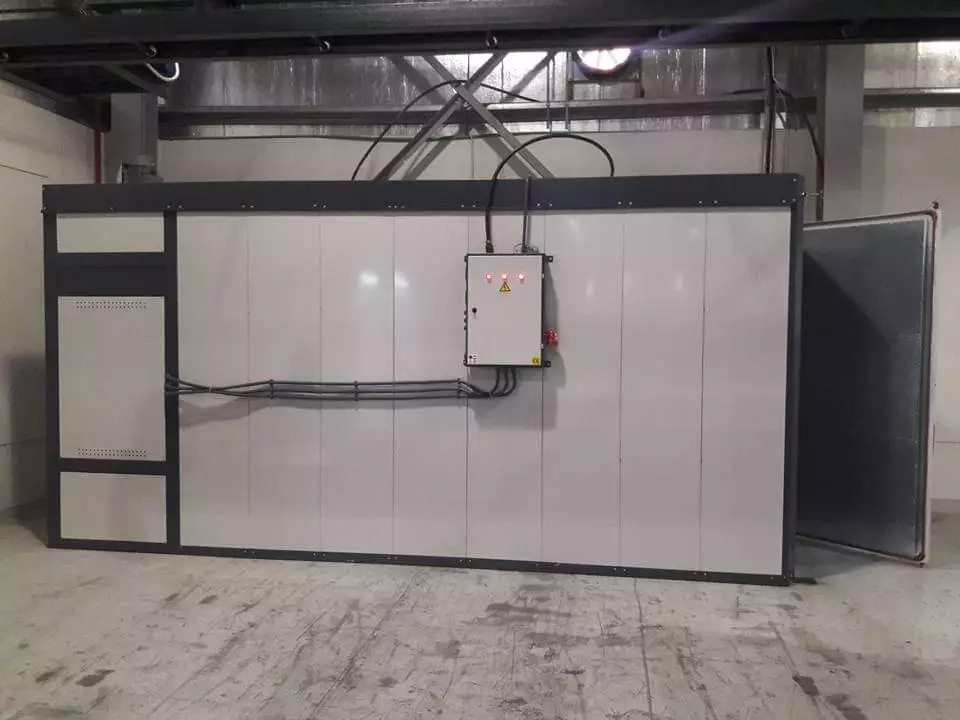
Buying a curing oven based only on its outside dimensions can leave a finishing line short on capacity before production even begins. Capacity planning looks at part size, metal mass, batch timing, rack arrangement, floor space, heat recovery, and expected growth as one connected process. A well-sized oven gives a shop enough room and heating power to meet current demand without creating an expensive bottleneck later.
Calculating Maximum Part Dimensions and Chamber Clearance Tolerances
Part measurements provide the starting point, but usable chamber space needs more breathing room than the workpiece dimensions suggest. Clearance around the load allows heated air to move across coated surfaces, while extra width and height accommodate racks, hooks, carts, and slight variations between fabricated parts.
Door openings deserve separate attention because an item may technically fit inside the chamber yet remain difficult to load safely. Taller frames, wide weldments, and irregular assemblies need enough entry clearance to prevent contact with walls, door jambs, or other freshly coated pieces.
Buyers comparing powder coating ovens should measure the largest expected loaded rack rather than a bare component. That approach gives a more realistic picture of usable capacity and reduces the risk of purchasing an oven that looks large enough on paper but restricts daily production.
How Heavy Metal Mass Impacts Bake Times and Burner Sizing
Heavy steel absorbs far more energy than thin sheet metal, which means two similarly sized parts can require very different heating times. Thick plate, castings, and large weldments may keep the oven working long after lightweight products have already reached their required metal temperature.
Burner capacity must account for total batch mass instead of chamber volume alone. An undersized heating system may eventually reach the setpoint, yet slow warm-up can stretch cycle times and reduce the number of loads completed during a shift.
Facilities considering a Reliant industrial powder coating oven can use typical load weights and cure schedules to judge the heating capacity they actually need. Proper sizing helps the oven bring dense production loads to temperature without relying on unnecessarily long baking periods.
Determining Daily Throughput: Parts Per Hour vs. Batch Cycle Times
Throughput depends on more than the number of parts that physically fit inside an oven. Loading time, heat-up time, required cure duration, unloading, door-open periods, and preparation for the next batch all affect how many finished pieces leave the line each day.
Production planners should calculate complete batch cycles and compare that figure with coating booth output. A booth that finishes racks faster than the oven can cure them creates a queue, while excessive oven capacity may sit unused and raise the original equipment investment.
Operations reviewing Reliant powder coating equipment for sale can compare equipment capacity as a complete process instead of treating the curing stage by itself. Matching application output with oven cycles keeps work moving and makes labor scheduling more predictable.
Designing Rack Layouts to Maximize Usable Chamber Volume
Rack design can change practical oven capacity without changing the oven itself. Well-spaced hooks and fixtures let a shop load more parts while preserving enough room for heated air to reach surfaces that would otherwise sit behind neighboring components.
Crowded racks may appear efficient, but blocked airflow can create slower-heating areas within the batch. Closely packed heavy parts also increase total thermal mass, which may add warm-up time and erase the production gains expected from fitting extra pieces onto the cart.
Teams evaluating a Reliant powder coating equipment package can consider racks, carts, booth dimensions, and curing space together. Coordinated handling makes it easier to move a full load from coating to cure without restacking parts or changing fixtures between stages.
Accounting for Floor Space, Cart Staging, and Cooling Zones
Oven footprint tells only part of the space story. Shops also need room for loaded carts waiting to enter, hot racks leaving the chamber, safe operator movement, door swing, maintenance access, and finished parts cooling before handling or packaging.
Cooling zones are easy to overlook during early layout planning. Freshly cured metal may remain hot enough to slow unloading or create a safety concern, so adequate staging prevents completed loads from blocking the oven entrance while the next batch waits.
Layouts built around Reliant powder coating systems can account for equipment flow across preparation, application, curing, and cooling areas. Thoughtful spacing keeps forklifts and carts moving without turning limited floor space into another production constraint.
Burner Recovery Rates: Factoring Heat Loss Between Production Batches
Opening a large oven door releases stored heat quickly, especially during frequent batch changes. Cold carts and fresh metal then enter the chamber and absorb additional energy, forcing the burner and circulation system to recover before the next load follows its normal cure profile.
Recovery performance matters most in operations running several batches per shift. Slow temperature rebound can quietly add minutes to each cycle, and those small delays can become hours of lost curing capacity over a busy production week.
Manufacturers looking at Reliant powder coating ovens or Reliant powder curing ovens should consider recovery needs alongside maximum operating temperature. Strong heat recovery helps maintain repeatable cycle timing as batches change throughout the day.
Sizing Your Oven for Current Workloads vs. Projected Business Growth
Current production numbers provide a useful baseline, but sizing equipment only around today’s busiest shift can leave little room for new contracts or larger products. Reasonable spare capacity gives a business flexibility without automatically pushing it toward the largest available chamber.
Expansion planning should consider likely changes in part dimensions, batch frequency, shift schedules, and product mix over the expected service life of the equipment. A Reliant powder coating oven for sale may fit present requirements, while a slightly different configuration could better support expected growth without wasting floor space or fuel.
Companies comparing Reliant powder coating equipment can also assess whether future expansion may involve additional booths, conveyors, pretreatment equipment, or complete Reliant powder coating systems. Reliant Finishing Systems can help businesses evaluate a Reliant powder coating equipment package and oven capacity around actual part loads, facility limits, production targets, and planned growth so the curing stage supports the operation instead of holding it back.