
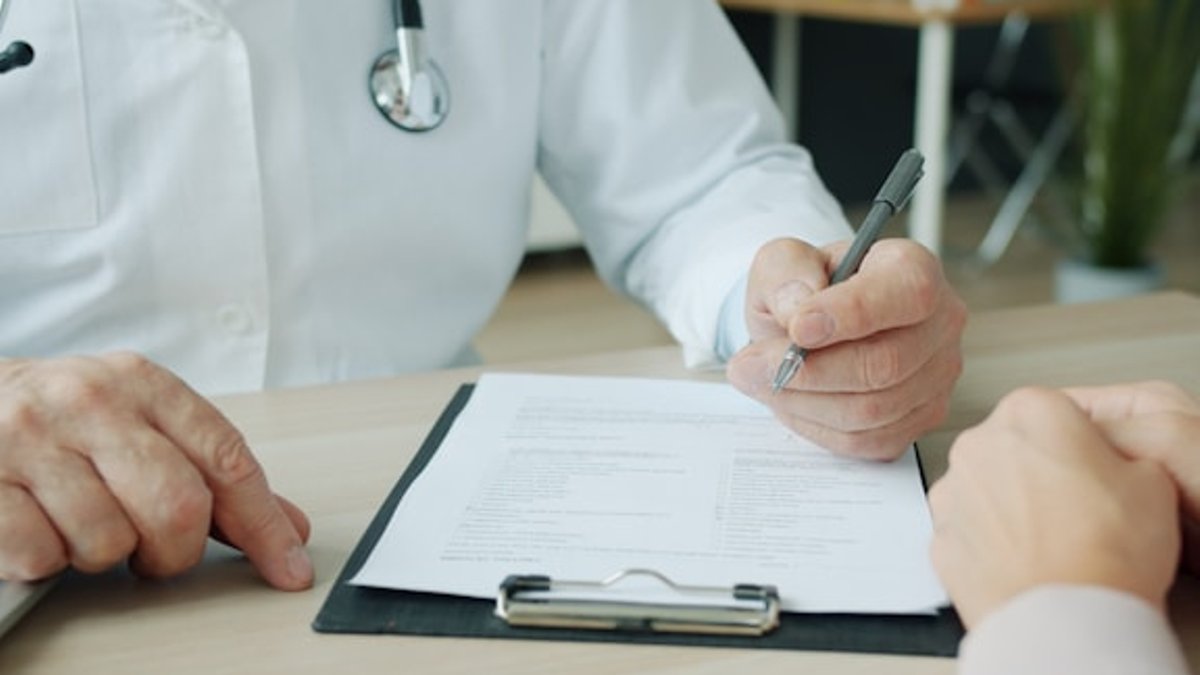
Patients who log into their portal and read their patient visit notes often discover discrepancies that clinicians missed, a pattern highlighted by a recent large‑scale survey.
Reviewing notes improves safety.
The research covered 22,889 individuals across three U.S. health systems and was published in 2020.
Among those who opened at least one document, 21.1% said they spotted an error.
Related: Mochi Health CEO Says AI Should Aid Doctors
Serious concerns clustered around four areas. Errors in diagnosis made up 27.5%, while mistakes in medical history accounted for 23.9%. Medication or allergy entries were responsible for 14%, and problems with tests, procedures or results comprised 8.4%. Nearly 59% of the reports involved a perceived flaw that could affect the diagnostic process, indicating these are more than simple clerical oversights.
How Mistakes Slip Into the Record
Errors rarely arise from a single careless moment. A problem list entered years ago may persist because no one questions it. Templates can insert default findings that were never observed, and dictation software sometimes mis‑hears a word, resulting in an incorrect term. Rapid history taking can also misattribute a family condition to the patient.
Time pressure adds another layer. A study in Annals of Internal Medicine found that physicians in outpatient settings spend roughly half the workday on documentation, plus an extra one to two hours after hours. When a clinician finalizes a document late at night, small slips are more likely to go unnoticed.
Even brief notes matter.
Related: Statins stopped in low risk elderly safely
The person actually typing the entry may not be the clinician who saw the patient. Trained scribes have been present in many clinics for years, capturing the encounter while the provider focuses on care. More recently, software drafts the text and a human reviewer polishes it, a workflow used by services such as Scribe‑X. Regardless of the method, HIPAA mandates that every individual handling the record signs a business associate agreement.
Compared with earlier eras when charts were handwritten and reviewed only by the ordering physician, today’s mixed‑model approach introduces both automation benefits and new points of failure. The reliance on templates and voice‑to‑text technology can amplify small inaccuracies, turning them into persistent record entries.
What Patients Can Do When They Spot an Error
Reading a clinical note can feel unsettling because the language is geared toward other professionals. Abbreviations appear blunt, and differential diagnoses list possibilities the clinician has already ruled out. The document is not a definitive verdict on the patient’s health.
A practical strategy is to verify four core items: the diagnosis spoken aloud during the visit, the medication list (including doses), the recorded allergies, and the family history. These checks align with the categories most often flagged as serious in the survey, making a brief review more efficient than scanning the entire text.