
Eurozone inflation fell to 2.8% in June, according to Eurostat’s final figures released Friday, marking the first decline since the price surge began in January. The drop arrives less than a week before the European Central Bank’s Governing Council meets on Thursday to decide whether to keep the deposit facility rate at 2.25% or raise it again.
June data shows modest easing across the bloc
The headline rate slipped from 3.2% in May to 2.8% in June, a reduction seen in 22 of the 27 EU member states. Core inflation, which excludes energy, food, alcohol and tobacco, eased from 2.6% to 2.4%.
Energy inflation cooled from 10.8% to 8.5%, while services inflation fell from 3.5% to 3.2%.
Among the eurozone’s four largest economies, Germany recorded 2.4% inflation, France 2.0%, Italy 3.0% and Spain 3.6%. The numbers suggest a slowdown but remain above the ECB’s 2% target.
Geopolitical tensions could reignite price pressure
Renewed hostilities this month have pushed Brent crude back up to $87 a barrel, according to market data. U.S. sanctions on Iran and a tightened naval blockade have added to market uncertainty, reviving concerns that inflation could climb again.
Related: BlackRock surpasses $15 trillion reveals investment focus
ING analysts note that while a surprise hike on Thursday is possible, the bank still expects the ECB to hold rates steady, with a second increase more likely in September.
July is not a forecasting meeting, giving policymakers time to assess updated economic projections before taking further action.
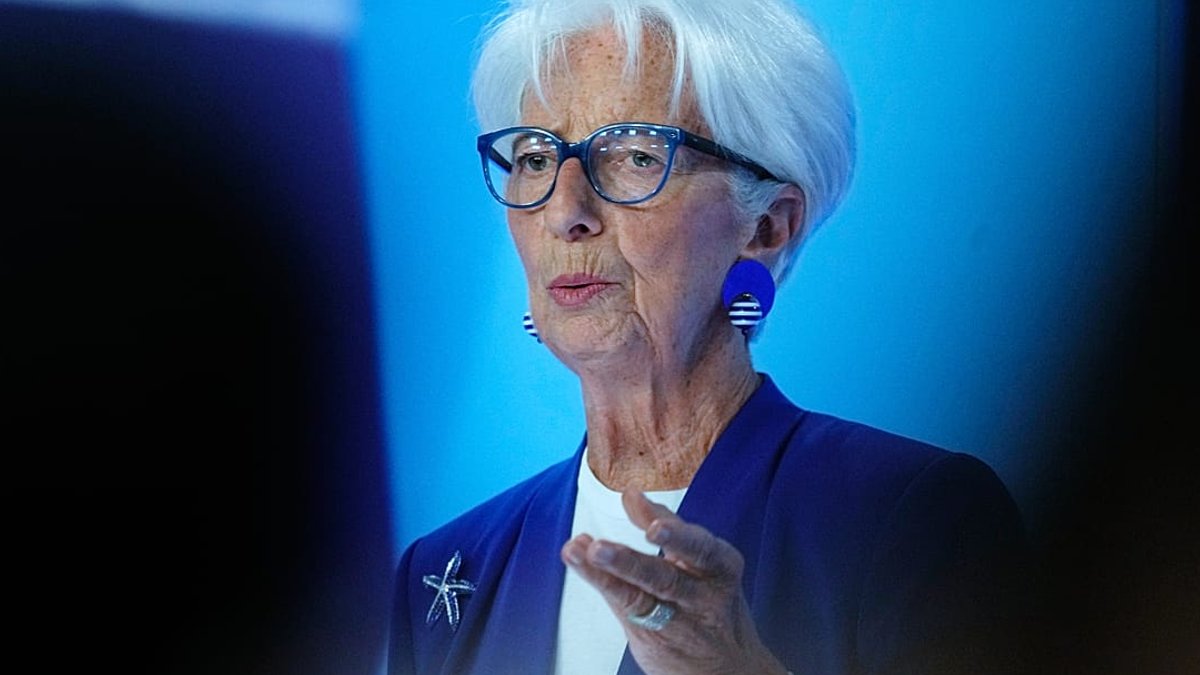
ECB President Christine Lagarde, speaking at a recent forum, said the June increase was not an “insurance hike” but a response to a genuine inflation problem.
Inflation pressure remains high.
She warned that inflation is projected to return to the 2% target only by late 2027 and only if monetary policy continues to tighten. Lagarde also rejected the idea of forward guidance, emphasizing that decisions will be made on a meeting‑by‑meeting basis.
Related: BlackRock crosses $15 trillion reveals investment strategy
Other major central banks have taken a more cautious stance. The U.S. Federal Reserve left its benchmark rate unchanged at 3.50%‑3.75% in June, while the Bank of England kept its Bank Rate at 3.75% after a 7‑2 vote, with two members favoring a rise to 4.0%.
The Bank of Japan, meanwhile, lifted its policy rate to 1.0%, the highest in 31 years.
For households in the eurozone, the June data could mean a brief reprieve from rising costs, especially in energy‑dependent regions.
However, the lingering volatility in oil markets and the ongoing geopolitical friction mean that any relief may be short‑lived, and further rate hikes remain on the table if inflation proves sticky.
Analysts will be watching the ECB’s decision closely, as a pause could signal confidence in the current trajectory, while a second hike would reaffirm concerns about persistent price pressures. The outcome will shape monetary policy across Europe for the rest of the year.