
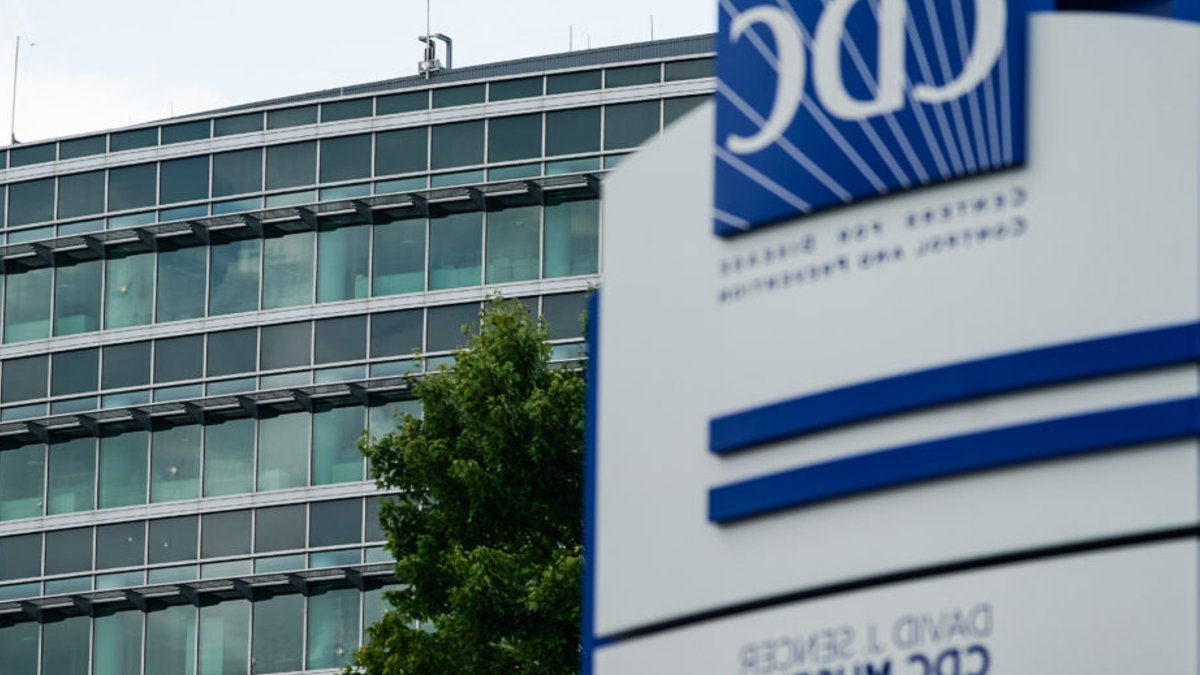
On August 8, 2025, Daniel B. Jernigan, former director of the National Center for Emerging and Zoonotic Infectious Diseases, was in his office at the Centers for Disease Control and Prevention (CDC) when he heard what sounded like hammering outside. His laboratory director appeared at his door, sharing that her husband, in the 12-story building next door, said his building was shaking.
Construction, on a Friday near quitting time, didn’t fit, and then she said that people feared it was an active shooter. From Jernigan’s window, he watched fire trucks swing onto Clifton Road, turning cars away from the gunfire.
People on the sidewalk raised their phones to record, then turned and ran. It was the hour when thousands of staff leave for the weekend. Alerts reached phones across campus warning of an active shooter, and they sheltered in place for hours.
We learned there was one man shooting, his rounds passing through buildings that were two and three football fields from where they began. Lab staff, mid-experiment, hid under their benches and waited there for hours.
Nearby, a member of Jernigan’s team walked into the hallway to ask what was happening just as a bullet shattered her window, spraying her office with glass. Less than a hundred yards from the shooter, a young mother in the CDC daycare parking lot lay on the floor of her car, waiting for police to let her join her child inside the building.
Related: Covid Probe Needs Independent Review Board
In all, the gunman fired roughly 500 rounds; about 180 struck or passed through CDC’s windows and walls. DeKalb County Officer David Rose, 33, a former Marine and father of three, was killed defending them. The gunman died across the street from CDC’s entrance.
Over the next six hours, Jernigan walked the floors of their building, checking on his staff. They were shaken but steady, the same people who suit up to handle lethal pathogens in high-containment labs, who worked through Ebola outbreaks in the forests of West Africa.
It felt strange to realize it was briefly more dangerous to sit at a desk in Atlanta than to chase a hemorrhagic fever in the field. It felt stranger still to learn that the man firing at them blamed CDC and Covid-19 vaccines for his own ill health.
The White House never publicly addressed the attack on its own public health agency. Jernigan has spent 31 years in public health, long enough to watch trust in institutions like CDC erode gradually, then sharply, through Covid-19.
Still, nothing prepared him for what followed in the months before and after the shooting: staff reassigned or dismissed, budget cuts and uncertainties, disregard for rigorous science-based decision making, and a Senate-confirmed CDC director fired for refusing to approve vaccine recommendations that weren’t grounded in evidence.
For those and other reasons, Jernigan and his fellow leaders resigned from the agency just days after the shooting. The impacts on CDC are evident: trust in CDC guidance dropped in 2026, with fewer than half of the public saying they have a “great deal” or “fair amount” of trust in the CDC to provide reliable information about vaccines.
Related: China’s growth slows to three-year low
A CDC workforce that has lost around 25% of its staff to firings, retirements, and departures; proposed presidential budget cuts of 40% to CDC alone for 2027 (although Congress can determine what cuts actually are enacted); and a vaccine advisory process reshaped to be outside the normal channels of evidence review.
Layered on top is rhetoric, from the highest levels of government, that casts career scientists as adversaries rather than protectors. Social psychologist Jonathan Haidt has argued that when institutions lose the public’s trust, so do the accounts they offer of the world.
For most of Jernigan’s career, public health measured itself by how well it moved from detection to protection, or D2P: finding threats fast and turning those findings into action that saves lives.
That work can still be done faster, more efficiently and transparently, and with the public engaged at every step rather than informed after decisions are made.
But August 8 taught Jernigan something the pandemic didn’t: it is no longer enough to protect people from outbreaks. They also must protect the process of protection itself, the institutions, the staff, and the norms of evidence that make science-based public health possible.
Related: Azerbaijan and Germany Strengthen Economic Ties
This means statutory protections for the CDC director’s independence, insulating advisory bodies from political control, and durable, multiyear funding that isn’t held hostage to each budget cycle.
CDC was built to respond to the world’s threats, and as made real by the shooting, the agency now remains the target of threats.
Resilience in individuals cannot substitute for protecting the institution that makes their work possible.
Getting from detection to protection faster remains necessary.
Protecting protection itself, defending the people, the process, and the science behind it from being dismantled, is now just as urgent.